
Written by Grace Rennison, Nurse Associate and Art Psychotherapist.
A meeting place
Meeting individuals “where they are” is a familiar term amongst art therapists. This is particularly relevant in settings where clients may be feeling lost or disconnected from a previous sense of self following traumatic injury or illness. As art therapists we meet clients where they are, but we often witness clients meeting themselves in therapy too. Identity, self-image and relationships with objects (prosthetics, wheelchairs etc.), can present as major themes in art therapy. Art therapy can be a safe and accessible way for clients to re-establish a sense of self, build relationships with others and objects, and frame new ways of seeing.
Art therapy uses open and flexible methods that allow clients to reflect on past, present and future aspects of themselves and their rehabilitation journey. Sometimes, things that are too difficult to put into words can emerge in art therapy through the use of art materials and in the images themselves. This is often an organic, client-led process. The art therapist sits alongside the client to provide careful and compassionate support to work through these themes in therapy.
Bridging communication
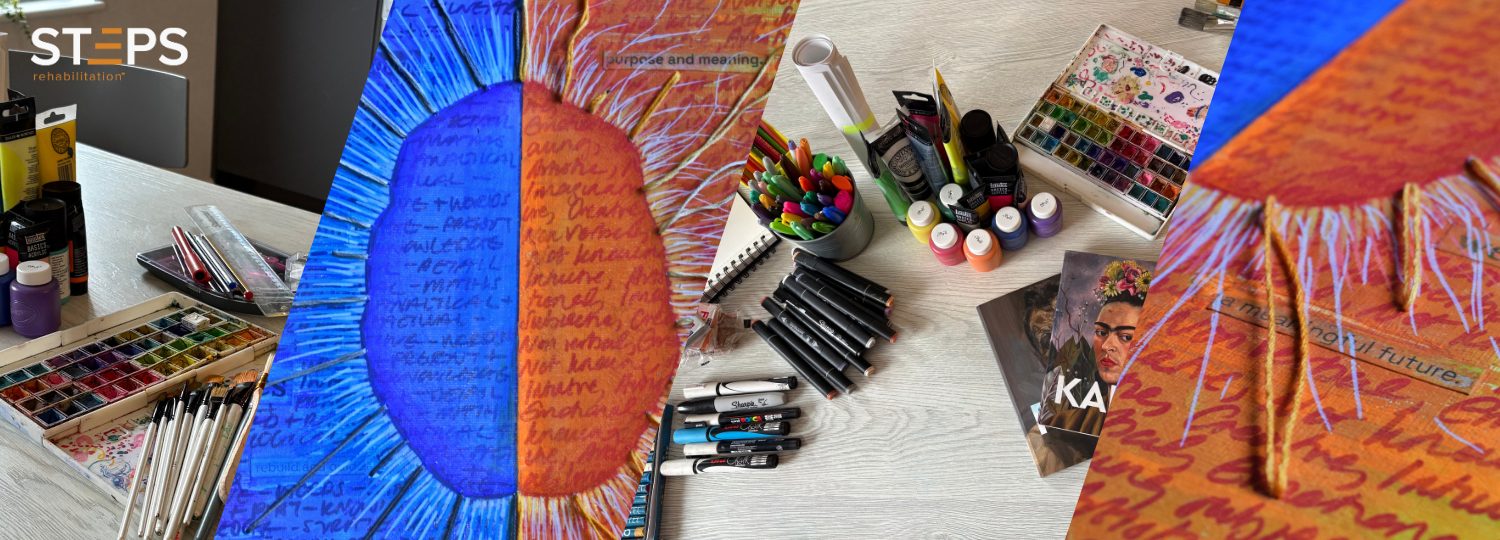
An advantage of art therapy is that verbal communication is not essential. This may reduce barriers to psychological therapy for those who cannot, struggle to, or simply prefer not to communicate their thoughts and feelings in this way. This makes art therapy a practical psychotherapeutic modality in neurorehabilitation, where a client’s ability to communicate verbally may be impacted by their injury. In offering a range of art materials, clients are given the opportunity to express their inner worlds using a choice of different creative mediums such as paint, clay or collage.
Clients may want to re-connect with a creative part of themselves that was very much active prior to their injury, in other cases, clients may discover a creative part they never knew existed, both of which can be an important part of the therapy and their journey to recovery.
More than just a pretty picture
The benefits of art therapy go beyond meaningful image making. In fact, there is often more focus on the process, than the product. This can alleviate pressure from clients who feel they are “not good at drawing” or are anxious about the end result. This places art therapy in a unique position, offering a creative, reflective and experiential space for clients during intensive goal focused rehabilitation.
It may be helpful for individuals to know that there are benefits from the art making process itself. Since most creative tasks involve both the mind and body, the art making alone can be valuable. Different parts of the brain can be activated during art making, engaging both thinking and movement. Neuroscience suggests this kind of activity may support neuroplastic changes, such as strengthening existing connections and forming new ones. Emotions can be explored and regulated alongside this through the sensory experiences available from material use. In this way, art therapy could support cognitive, emotional and sometimes functional needs for those with life changing injuries.