
Written by Hannah Wright, Senior Physiotherapist
Introduction
Brain injuries can be categorised into Traumatic Brain Injury (TBI), Acquired Brain Injury (ABI), Concussion, Diffuse Axonal Injury. Please see the dedicated page on brain injury by following this link: brain injury rehabilitation - STEPS Rehabilitation
Brain injuries, particularly traumatic brain injuries (TBI), can significantly disrupt the vestibular system, leading to symptoms such as dizziness, balance problems, poor spatial awareness and visual impairments. This dysfunction may arise from both peripheral and central injuries.
There are many different types of vestibular dysfunction such as Benign Paroxysmal Positional Vertigo (BPPV), persistent postural-perceptual dizziness (3PD), vestibulopathy and vestibular migraine.
Prevalence of vestibular dysfunction in brain injury
87% of TBI’s aged 40 and under have a vestibular dysfunction (Marcus et al 2019).
Dizziness is reported in 26% of patients 12 months post-TBI, nearly one third of these patients with moderate to severe dizziness (Chae et al., 2022).
What is the vestibular system?
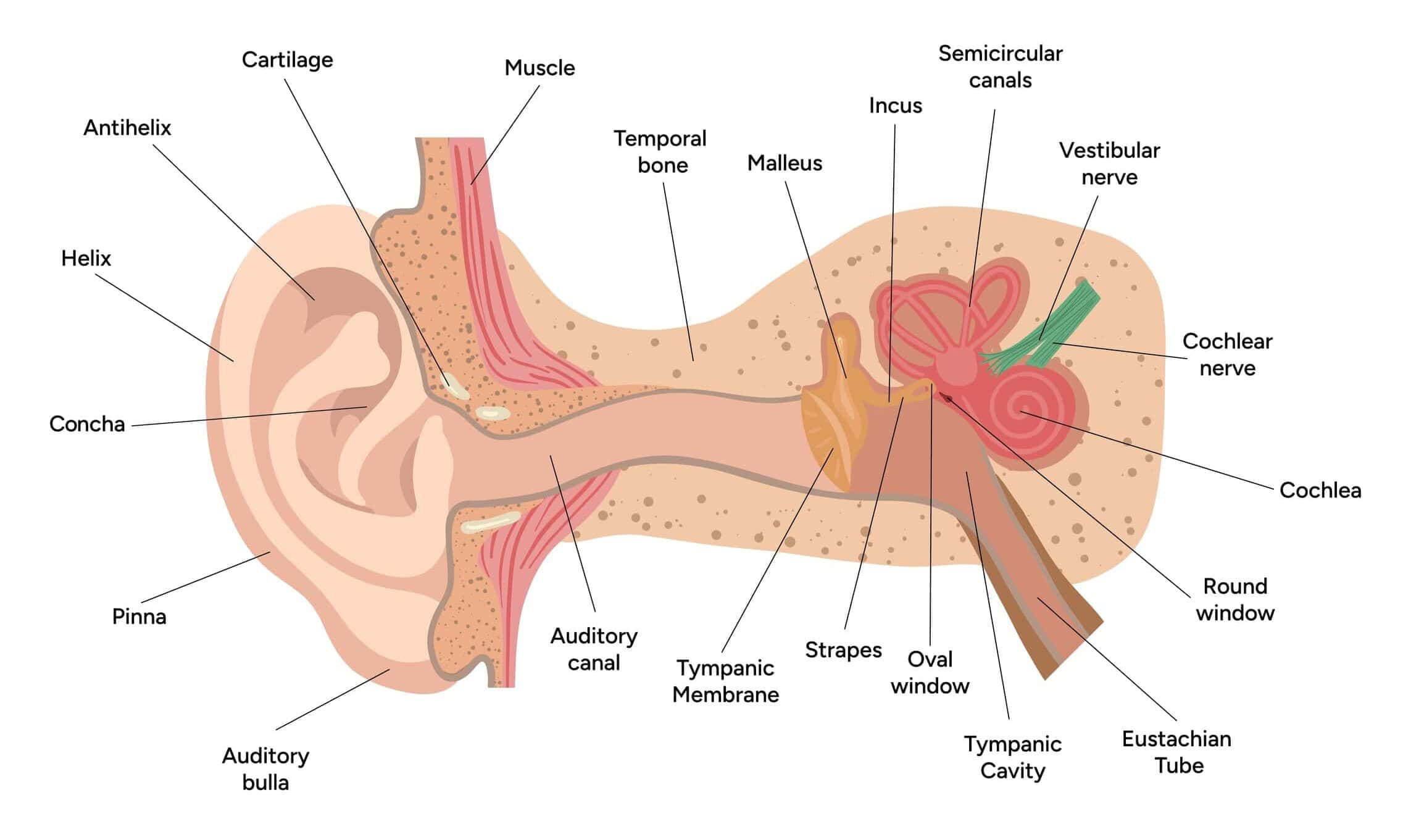
The vestibular system controls balance and proprioception via the peripheral and central system. It integrates information from the inner ear, eyes and proprioceptive senses throughout the body and is responsible for detecting head position, motion and spatial orientation.
It is a specialised sensory system located in the inner ear and can be found adjacent to the cochlea. The system in comprised of vestibular labyrinth, the vestibular ganglion and the vestibular nerve. The labyrinth has five sense organs - three semicircular canals (horizontal, anterior, posterior) which sense rotational motion of the head and two otolith organs that sense gravity and linear acceleration of the head. The peripheral processes of the vestibular ganglion receive these stimuli, and the vestibular nerve transmits information to the brain where it is processed.
What are the key functions of the vestibular system?
- Balance maintenance
- Spatial orientation
- Vestibular Ocular Reflex (VOR)
Why is a vestibular assessment important after brain injury?
A vestibular assessment is important after a brain injury due to the potential impact on balance, coordination and fatigue.
Trauma to the brain can result in an abnormal vestibular system functioning, and the brain can receive abnormal signals regarding the position and movement of the head in space resulting in dizziness and a sense of instability. When this information is inaccurate the brain most often relies on visual input and proprioception (body’s ability to sense its own position and movements in space) to quickly assess orientation and to remain balanced.
By relying on visual input rather than vestibular input as the primary source of balance, often leads to fatigue and difficulty performing daily activities. It can also result in eyestrain and headaches.
Brain injury can also significantly impact proprioception affecting balance and coordination. This can result in excessive energy expenditure to stand and walk, increasing fatigue. Further increasing the reliance on the visual system.
This over reliance on the visual system can impact balance, coordination, spatial orientation and increase your risk of falls.
Often when people are dizzy, they refrain from moving their head which can lead to neck stiffness and headaches resulting in an increase in the severity of the dizziness.
The sooner vestibular rehabilitation can commence, the sooner the systems can begin working together.
Common signs and symptoms
| Headache | Trouble falling asleep | Irritability |
| Nausea | Excessive sleep | Sadness |
| Vomiting | Loss of sleep | Nervousness |
| Balance issues | Drowsiness | More emotional |
| Dizziness/spinning | Light Sensitivity | Numbness |
| Fatigue | Sound sensitivity | Feeling “slow” |
| Feeling “foggy” | Unsteady gait | Difficulty remembering/concentrating |
| Visual problems | Dislike/avoidance of turning in bed | Ears ringing |
| Neck pain | Dislike / avoidance of reaching to pick up items | Anxiety |
| Avoidance of busy places and environments | Feeling ‘funny’ in the morning | Feeling like being in the Waltzer's |
What to expect from a vestibular assessment?
A vestibular assessment is often performed by a Physiotherapist or Occupational Therapist. The below is typically included in an assessment:
- Subjective assessment: This could include questions about your symptoms, general health and current medication.
- Objective assessment: This could include assessing your eye movements, posture and neck range of motion.
- Special tests: These tests may require us to move your head quickly which could provoke your symptoms.
- Functional assessment: This could include looking and your balance, coordination and how you walk.
- Treatment: The course of treatment will be discussed after the assessment.
Can vestibular rehabilitation (VR) have an impact?
Yes, VR can have a positive impact.
- There are canal repositioning manoeuvres for each of the 3 semi-circular canals enabling us to bring immediate relief to clients with BPPV. The Epley’s manoeuvre, which is a common treatment for BPPV has been found to be 91% effective after 1-2 treatments (Nunez et al., 2000).
- VR can help the brain to minimise dizziness symptoms caused by imbalances between different parts of the inner ears and can facilitate neurological compensation via neuroplasticity.
- VR can facilitate habituation to desensitise hypersensitivity in 3PD and vestibular migraine.
- VR can facilitate return to sports and athletic activities requiring high level balance and speedy head motions.
- VR along with balance and strength training can lower fall risk.
Vestibular pathway at STEPS
The vestibular screening pathway at STEPS is a structured process to identify clients with possible vestibular dysfunction (e.g., dizziness, vertigo, imbalance) and determine appropriate treatment or referral.
The pathway begins with early identification of symptoms such as dizziness, vertigo, and imbalance. This is followed by a thorough subjective history and targeted objective assessment, including positional testing and evaluation of vestibulo-ocular reflex function by the Vestibular Physiotherapist. If required, referrals can be made to the appropriate teams for further assessment and recommendations for discharge.
For those client’s appropriate for vestibular rehabilitation, condition-specific interventions such as canalith repositioning for BPPV, gaze stabilization exercises for vestibular hypofunction, and balance training are delivered within a progressive framework tailored to clients' goals.
When clinically indicated, state of the art technologies can be incorporated into the client’s Vestibular Rehabilitation.
On the pathway the client is supported throughout their rehabilitation journey from admission to discharge whilst at STEPS.
Useful resources
References
Chae, R., Barber, J., Temkin, N.R. and Sharon, J.D. (2022). Dizziness After Traumatic Brain Injury: A Prospective TRACK-TBI Analysis of Risk Factors, Quality of Life, and Neurocognitive Effects. Otology & Neurotology, Publish Ahead of Print. doi:https://doi.org/10.1097/mao.0000000000003710.
Marcus, H.J., Paine, H., Sargeant, M., Wolstenholme, S., Collins, K., Marroney, N., Arshad, Q., Tsang, K., Jones, B., Smith, R., Wilson, M.H., Rust, H.M. and Seemungal, B.M. (2019). Vestibular dysfunction in acute traumatic brain injury. Journal of Neurology, 266(10), pp.2430–2433. doi:https://doi.org/10.1007/s00415-019-09403-z.
Nunez, R.A., Cass, S.P., Furman, J.M. and Holt, G.R. (2000). Short- and Long-Term Outcomes of Canalith Repositioning for Benign Paroxysmal Positional Vertigo. Otolaryngology–Head and Neck Surgery, 122(5), pp.647–653. doi:https://doi.org/10.1016/s0194-5998(00)70190-2.