
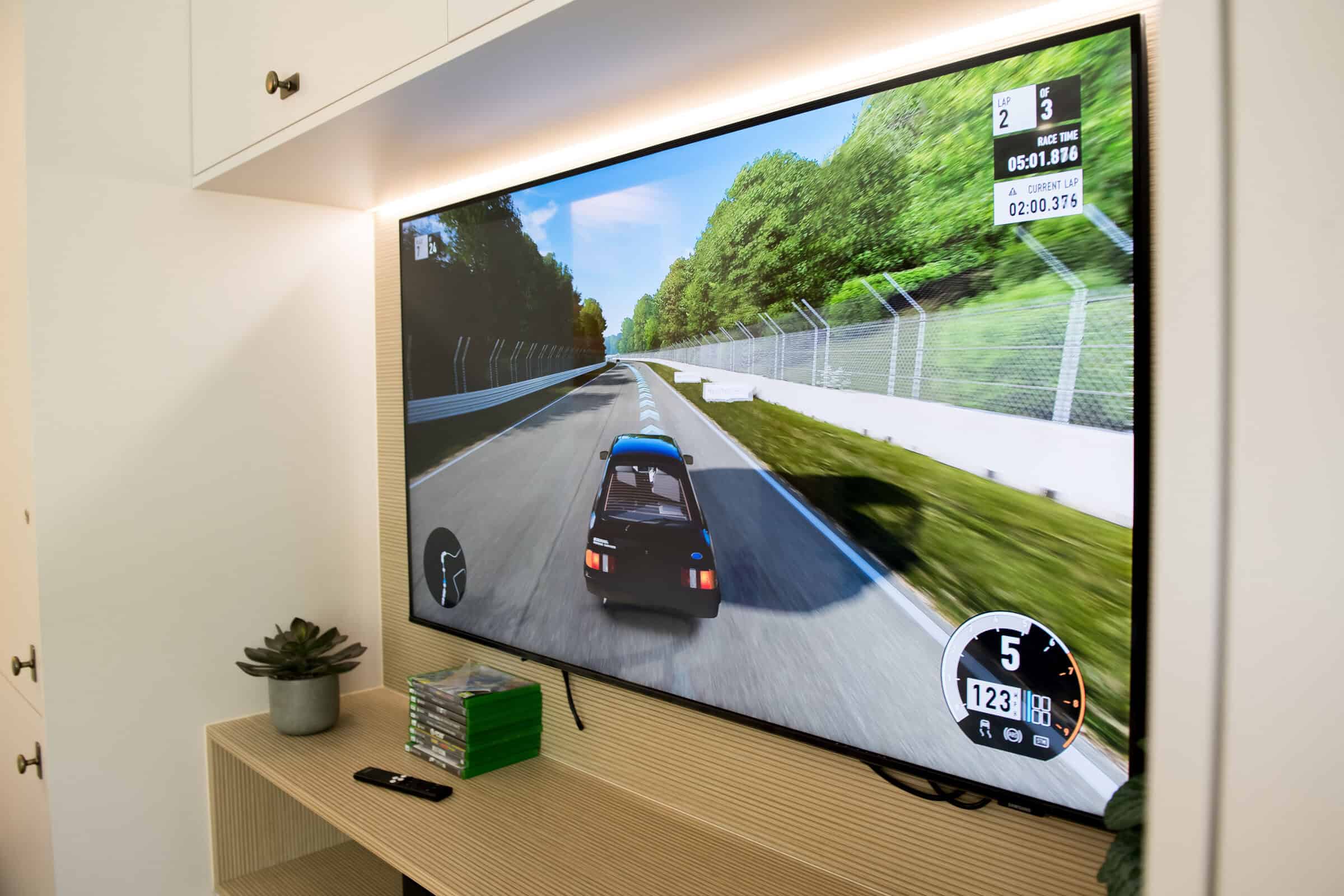
For many people, gaming is much more than a hobby. It provides opportunities to socialise, develop skills, relax and enjoy games with family and friends. Following a life-changing injury such as a spinal cord injury, brain injury or amputation, returning to gaming can represent an important step towards regaining independence, identity and reconnecting with activities that were previously enjoyed.
At STEPS Rehabilitation, assistive gaming has become an exciting addition to the recently refurbished Transitional Living Unit (TLU), where it is used as part of rehabilitation programmes and as a leisure activity by clients.
Supporting rehabilitation through meaningful activity
The Occupational Therapy team works with clients to assess whether assistive gaming could form part of their rehabilitation programme. Sessions are tailored to each individual's goals, whether that is returning to gaming they previously enjoyed, developing new vocational skills, improving hand function or simply finding an accessible way to relax and have fun.
Because gaming is engaging and motivating, it provides an excellent opportunity to practise therapeutic movements without clients feeling like they are completing repetitive exercises.
Therapists can use gaming to encourage movement in a client's more affected arm or hand, helping to improve strength, coordination, endurance and fine motor control whilst keeping sessions enjoyable.
Different switches and inputs can be arranged for use by, for example, finger; thumb; hands; elbows; lower limbs or by head movements. Additionally, the complexity of the game and the number of switches used can be changed depending on a person's cognitive abilities. There are also options using a games accessible options to split off key functions of the game to play the game.
The Occupational Therapists and Therapy Technician at STEPS are learning more each day about the possibilities of gaming, though most importantly they are able to see their clients accessing an everyday activity, which until then had not been possible to do.
Lead Occuational therapist, explains:
“Gaming has become an important occupation to many people and finding ways to return to gaming after life changing injuries has high value.”
Technology that adapts to the individual
One of the greatest advantages of assistive gaming is that it can be adapted to suit almost any level of ability.
STEPS Rehabilitation has invested in a range of specialist equipment, including:
- Core gaming hardware
- Adaptive control options
- Adaptive gaming kits
- Mounting and positioning equipment
- Supporting accessories
- Bespoke adaptations: created by the STEPS team to support individual grip, reach and control needs.
Rather than requiring clients to adapt to the controller, the equipment can be configured for the individual. Buttons can be remapped, switches repositioned and controls customised to suit each client's movement, strength and range of motion.
The therapy team can also create bespoke adaptations using 3D printing technology by Toby Chan, Head of Design, allowing clients to grip or operate controllers more comfortably and independently.
Making gaming accessible
Accessibility features built into many modern games also make a significant difference.
Games can often be customised by changing control layouts, simplifying commands or removing unnecessary functions. For example, in some racing games, braking can be automated so that clients only need to focus on steering and acceleration.
The STEPS team has carefully selected a range of accessible games covering different genres and abilities. Driving games can be an excellent starting point as they often require fewer inputs, whilst more complex titles, including action games, can also be adapted so that clients can continue enjoying games they played before their injury.
The current games library includes football, racing, adventure, creative, strategy and action titles such as FC25, Forza Motorsport 7, Team Sonic Racing, Sonic Mania Plus, Klonoa, Minecraft, Balatro Special Edition, Jurassic World Evolution 3, Split Fiction and Call of Duty: Modern Warfare 2. This variety allows therapists to match games to each client's interests, abilities and rehabilitation goals, from lower-input racing sessions through to more complex games that challenge coordination, timing and decision-making.
Therapy Technician Adam Day works closely with clients to set up the equipment, adjust controls and support them throughout their gaming sessions.
Building confidence and independence
The adaptable technology enables clients with very limited movement to participate using joysticks, switches or touch-operated control units, which can be mounted to wheelchairs, tables or headrests. Multiple devices can also be connected simultaneously, allowing each gaming setup to be tailored to the individual's needs.
As clients progress through their rehabilitation, their gaming setup can be adapted to encourage greater movement or provide increased challenge, helping to support their ongoing recovery.
Working with specialist organisations
STEPS Rehabilitation also works closely with the charity SpecialEffect, which specialises in helping people living with physical disabilities access gaming.
Following an assessment, eligible clients may be able to apply for specialist gaming equipment to use at home, helping them continue gaming independently after leaving STEPS. The charity provides expert advice on equipment, accessibility and suitable gaming solutions based on each person's individual needs.
Having specialist equipment available within the Transitional Living Unit also gives clients the opportunity to try different setups before deciding what works best for them.
More than just rehabilitation
Whilst assistive gaming can support positive rehabilitation outcomes, it also provides an enjoyable activity for clients to engage in as part of their rehabilitation, helping to enhance their overall wellbeing.
It also offers opportunities for social interaction, friendly competition and shared enjoyment with other clients, therapists, friends and family, helping to restore a sense of normality following a catastrophic injury.